
Acquiring raw materials is one of the key operational costs of a ready-mix concrete plant. Cement, sand, aggregates, and other raw materials are bought on a regular basis to keep the manufacturing process going continuously. But even slight discrepancies between purchases, receipts, and stocks can cause monetary losses.
For instance, if the amount of material loaded in the aggregate truck is lower than indicated on the purchase order, the variance may go unnoticed without weight confirmation. The total variance from all such cases can significantly impact material expenses and production plans.
This is where weighing bridge integration with ERP comes into play. Weighbridge integration links vehicle weight records with purchase orders and GRNs to support accountability in material management.
REMICON, developed by Shadow infosystem, is a SaaS-based ERP software that can be used in ready mix concrete plants. With its Procurement, Inventory, and Weighbridge Management module, REMICON allows owners of ready mix concrete plants to track their raw materials and check weight differences.
Why Is Purchase and Inventory Management Important for RMC Plants?
RMC plants need raw materials continuously to meet orders and production schedules. But managing purchasing and inventory in two separate registers can be difficult to keep up with.
Common challenges include:
Material quantity discrepancies: Differences between supplier invoices and actual received quantities may go unnoticed.
Unrecorded material shortages: Without proper weight verification, plants may pay for quantities that were not actually delivered.
Incorrect stock balances: Manual entries can create differences between physical inventory and recorded stock.
Uncontrolled procurement: Purchases made without reviewing available stock can increase unnecessary inventory costs.
Supplier payment confusion: Incomplete GRNs and purchase records can make invoice verification difficult.
Limited material consumption visibility: Plant managers may struggle to compare purchased quantities with actual production consumption.
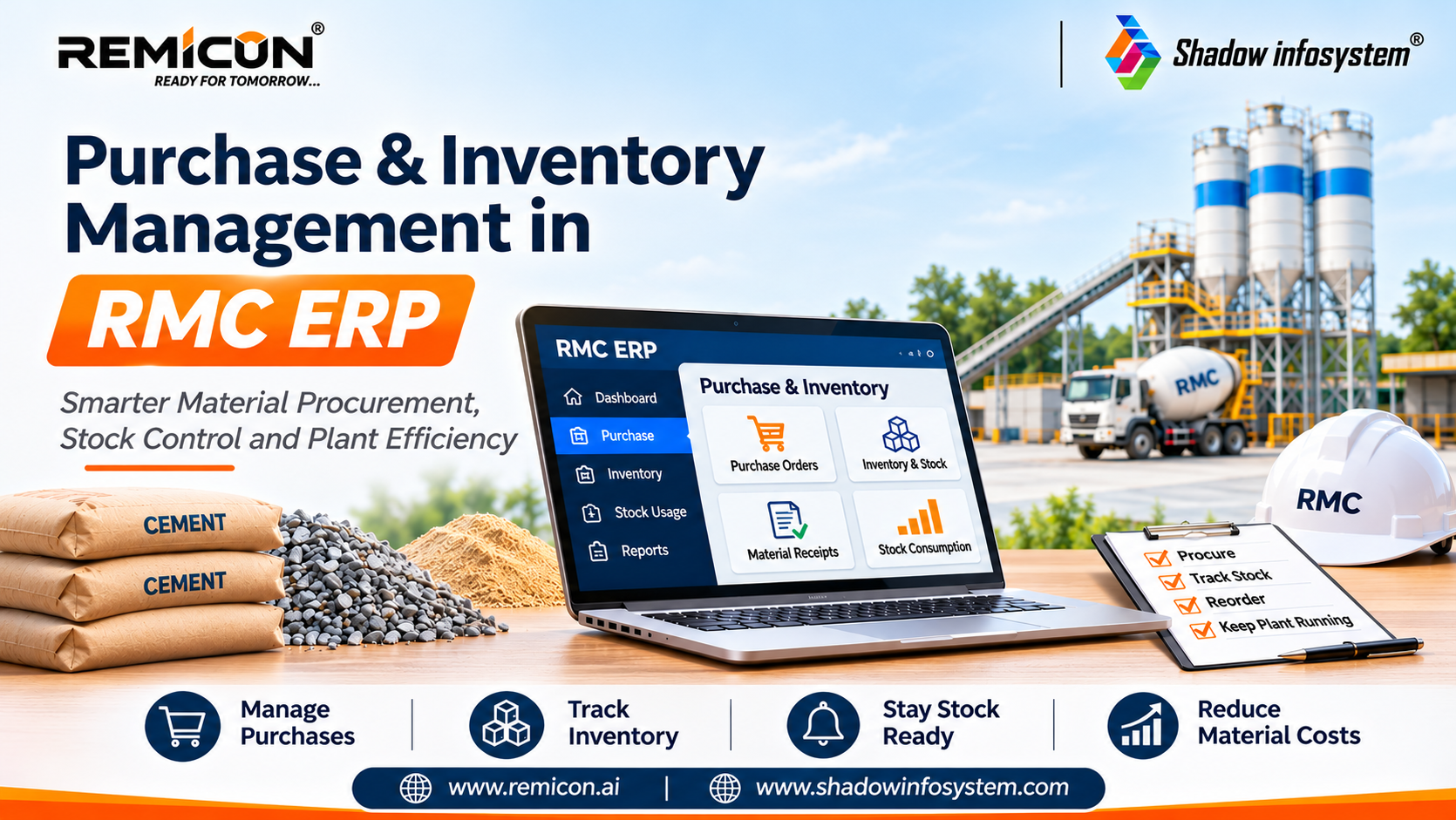
Using the right RMC inventory management software enables efficient integration of procurement information, material receipts, and consumption of materials. Management will have easy access to information regarding the availability of material and purchase costs.
What Is a GRN in an RMC Plant?
The Goods Receipt Note (GRN) is a form that is prepared upon receiving the purchased materials in the RMC plant. The GRN will serve as documentation of the quantity and particulars of the materials received from the supplier.
For instance, if the supplier brings a load of aggregates to the plant, the plant crew measures how many have been delivered in comparison with the purchase order and weighs them. After that, a GRN is prepared to confirm their delivery.
A GRN generally includes:
Supplier or vendor name.
Purchase order reference.
Material category, such as cement, sand or aggregate.
Vehicle number.
Delivery date and time.
Gross vehicle weight.
Tare vehicle weight.
Net material weight.
Accepted and rejected quantities, where applicable.
Remarks regarding material quality or quantity discrepancies.
How Does GRN Software for RMC Plant Operations Help?
There exists a structured GRN software used at RMC plants that links the material received to the corresponding purchase and inventory information.
This way, there is no need for recording materials in separate registers since the materials received can be recorded according to the purchase order.
REMICON assists in procurement management through GRN management, vendor details, purchase orders and inventory control. The integrated process aids in maintaining a proper record of purchased items.
After the information on the receipt has been validated and captured, the appropriate stock position will be adjusted depending on the established inventory process.
It will help establish the level of material that has been ordered, received, and entered into plant inventory.
How Does Weighbridge Integration with ERP Reduce Material Loss?
A weighbridge is an instrument used to measure the weight of vehicles transporting material. The RMC plant can use a weighbridge to check the weight of materials that are being supplied.
The true benefit of using the weighbridge comes from linking the weight data with purchasing and inventory data.
With weighbridge integration with ERP, plant teams can compare the actual received quantity against the supplier's declared quantity and identify differences before accepting the delivery.
1. Record Gross and Tare Vehicle Weights
The first step is recording the vehicle's gross and tare weights.
Gross Weight: Total weight of the loaded vehicle.
Tare Weight: Weight of the empty vehicle.
Net Weight: Actual weight of the delivered material.
The calculation is:
Net Material Weight = Gross Weight − Tare Weight
For example:
In this example, the plant receives 200 kg less material than the declared quantity.
When weight records are maintained digitally, the difference can be reviewed against the purchase order and supplier invoice before the receipt is finalized.
2. Identify Aggregate Shortages Per Truck
Small differences in individual deliveries can become significant when an RMC plant receives multiple trucks every day.
Consider an illustrative calculation:
Average aggregate shortage: 200 kg per truck.
Incoming aggregate trucks: 20 per day.
Total daily shortage: 4,000 kg or 4 tonnes.
Assumed aggregate purchase rate: ₹1,500 per tonne.
Estimated daily material loss: ₹6,000
Estimated loss over 26 operating days: ₹1,56,000
These figures are illustrative, not an industry-wide average or a guaranteed saving. Actual differences and financial impact depend on purchase rates, weighing conditions and supplier agreements.
This example demonstrates why even a small quantity difference deserves attention. A connected weighment and inventory process helps plant owners identify repeated discrepancies and investigate them before they become recurring expenses.
3. Maintain Digital Weighment Records
Manual weight slips can be misplaced, entered incorrectly or become difficult to retrieve during supplier reconciliation.
REMICON's Weighbridge Management module supports:
Inward vehicle weight records.
Outward vehicle weight records.
Vehicle-wise weighment information.
Weight slip generation.
Weighbridge reports.
Weight reconciliation.
These records provide a reference for verifying incoming materials and reviewing historical delivery information.
4. Improve Supplier Accountability
When purchase orders, weight slips and GRNs are connected, businesses have a clearer basis for checking supplier invoices.
For example, if the same supplier repeatedly delivers less aggregate than the ordered quantity, the plant manager can review previous weighment records and identify the pattern.
This helps improve supplier discussions, invoice verification and purchasing decisions.
How REMICON Manages Purchase and Inventory Operations
REMICON by Shadow infosystem connects procurement, inventory, weighbridge and financial records to support better control over raw material purchases.
Procurement Management
The Procurement Management module helps plant teams organize purchasing activities and supplier information.
Key capabilities include:
Vendor management.
Purchase requisitions.
Purchase order generation.
GRN management.
Supplier payment records.
Vendor performance information.
These features help maintain a structured purchasing process from material requirements to supplier payment tracking.
Raw Material Stock Management
Maintaining accurate inventory is essential because material shortages can interrupt production, while excessive stock can increase storage and working capital costs.
REMICON supports raw material stock management for concrete plant operations through:
Cement stock tracking.
Aggregate stock tracking.
Admixture inventory.
Raw material stock records.
Stock transfers.
Stock alerts.
Material consumption tracking.
Plant managers can review material availability and maintain better visibility into inventory across their operations.
Cement and Aggregate Purchase Tracking
Cement and aggregates account for a significant portion of the material requirements of an RMC plant. Their purchase quantities, received weights and consumption records need consistent monitoring.
REMICON helps organize cement and aggregate purchase tracking by connecting procurement and inventory information.
This allows authorized users to review supplier purchases, received quantities and available stock records. It also helps identify differences between incoming material and recorded inventory.
Vendor Outstanding Report and Payment Tracking
Purchase management does not end when the material reaches the plant. Supplier invoices, payment dates and outstanding balances also need attention.
REMICON's Finance and Accounts capabilities include purchase bills, payables, payment tracking and financial reports.
These records help management review:
Supplier-wise outstanding balances.
Pending purchase payments.
Recorded purchase bills.
Payment transactions.
Supplier account information.
A vendor outstanding report gives management better visibility into pending liabilities and helps organize supplier payment follow-ups.
How Purchase, GRN and Inventory Records Work Together
The effectiveness of an inventory system depends on how well its different processes are connected.
An organized material management workflow generally follows these stages:
Step 1: Purchase Requirement
The plant identifies the required quantity of cement, aggregates, sand or admixtures based on stock availability and production requirements.
Step 2: Purchase Order
A purchase order is created with supplier details, material specifications, quantities and agreed rates.
Step 3: Material Arrival
When the supplier's vehicle reaches the plant, its details are recorded and the material is sent for weight verification.
Step 4: Weighbridge Verification
Gross and tare weights are recorded to determine the net delivered quantity. Differences can be checked against the purchase order.
Step 5: GRN Generation
After the material receipt is verified, the GRN is recorded against the relevant purchase transaction.
Step 6: Inventory Update
The accepted material quantity is reflected in the inventory records according to the configured workflow.
Step 7: Purchase Bill and Payment Tracking
The purchase bill is reviewed against the relevant purchase and receipt records. Supplier payments and outstanding balances are maintained in the financial module.
This connected process helps reduce repeated manual entries and creates a more reliable record of material movement.
Benefits of Centralized Raw Material Stock Management for Concrete Plants
A centralized inventory system provides more than a record of available materials. It helps plant owners understand purchasing patterns, material movement and operational expenses.
Important benefits include:
Better Stock Visibility: Review cement, aggregate and admixture availability without depending entirely on separate manual registers.
Reduced Material Discrepancies: Compare supplier-declared quantities with actual weighment records and identify shortages.
Improved Purchase Planning: Use available stock information to make more informed purchasing decisions.
Supplier Payment Control: Maintain purchase bills, payables and supplier transaction records in one system.
Consumption Monitoring: Compare material usage with production records to identify unusual differences.
Multi-Plant Inventory Visibility: Manage material records across different plant locations through centralized ERP access.
Serving RMC Businesses Across South India
Construction and infrastructure activities across South India create growing operational requirements for ready-mix concrete businesses, including efficient material procurement and inventory management.
REMICON by Shadow infosystem serves RMC businesses across Bangalore, Chennai and Hyderabad with an integrated ERP platform covering procurement, GRN management, weighbridge records, raw material inventory and supplier payments. Its centralized system helps businesses maintain accurate purchase records, monitor material movement and improve stock control across plant operations.
REMICON also supports third-party API integrations with existing weighbridge systems, GPS tracking providers, accounting software, WhatsApp, SMS gateways and payment gateways. These integrations help RMC businesses connect their existing systems with REMICON, reducing the need to replace tools already used in daily operations. Integration availability is subject to provider compatibility and configuration.
Why Choose REMICON by Shadow infosystem for Purchase and Inventory Management?
Managing procurement through manual registers and disconnected spreadsheets can make it difficult to identify material shortages, verify supplier invoices and maintain accurate inventory.
REMICON by Shadow infosystem brings important RMC operations together through an industry-specific cloud-based ERP platform.
Its purchase and inventory management capabilities include:
Purchase requisitions and purchase orders.
Vendor and supplier management.
GRN management.
Cement, aggregate and admixture stock tracking.
Stock transfers and alerts.
Weighbridge integration and weight reconciliation.
Vehicle-wise inward and outward weight records.
Digital weight slip generation.
Material consumption tracking.
Purchase bills and supplier payment management.
Vendor outstanding and financial reports.
Multi-plant operational visibility.
Weighbridge connectivity is available on request, with compatibility and provider setup reviewed before activation. This allows businesses to assess integration with their existing weighing arrangements.
Gain Better Control Over Every Material Purchase with REMICON
Accurate procurement and inventory management play an important role in maintaining the profitability of an RMC business. Even small differences in material quantities can accumulate into substantial expenses when they go unnoticed across repeated deliveries.
REMICON by Shadow infosystem helps connect purchase orders, weighment records, GRNs, stock information and supplier payments through one centralized platform.
Book a REMICON demo to understand how its Procurement, Inventory and Weighbridge Management capabilities can support better material accountability and operational control at your RMC plant.