
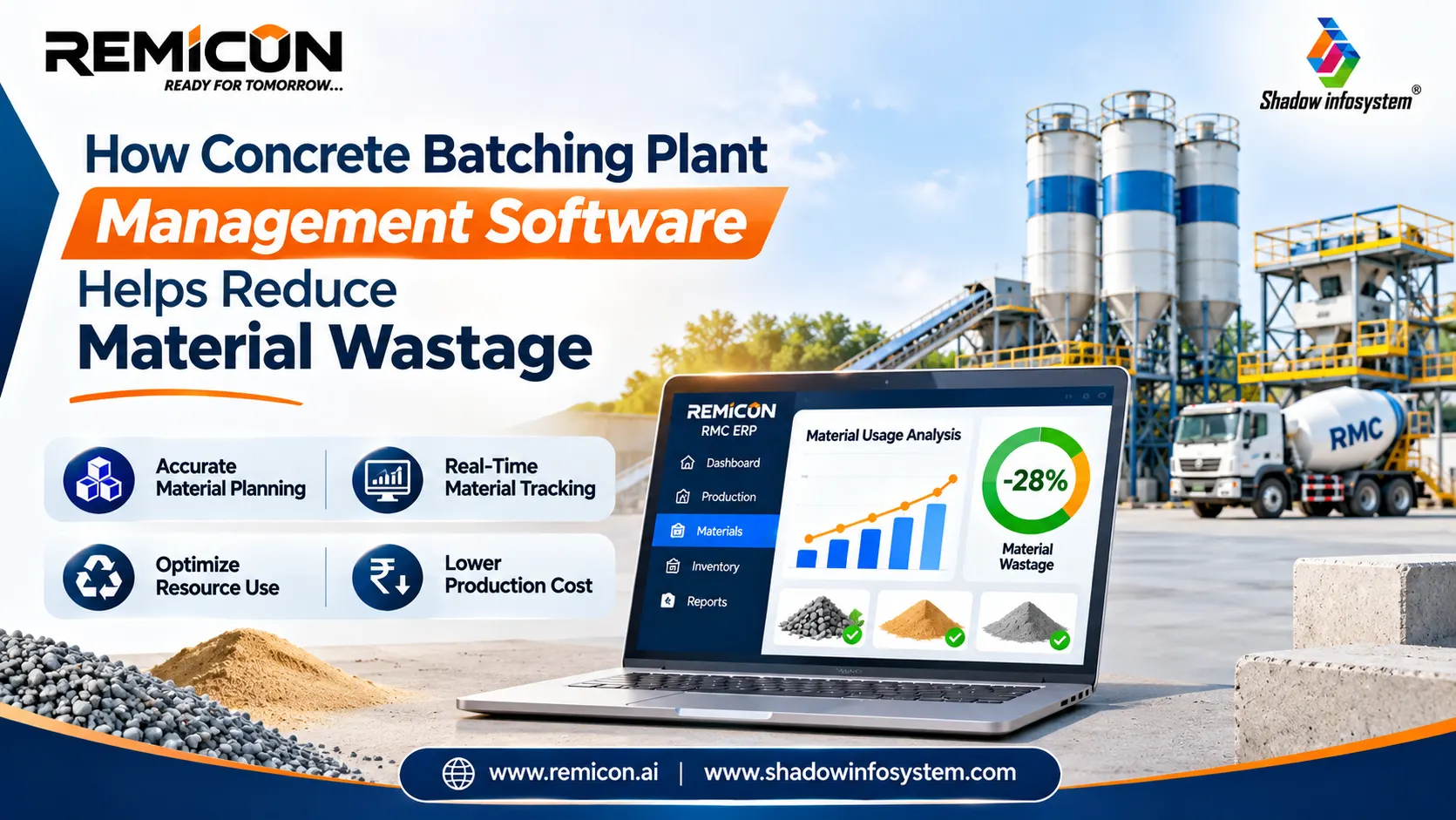
Material wastage is one of the major operational challenges in ready-mix concrete production. Excess cement consumption, incorrect aggregate quantities, inaccurate batching, poor stock management and unnecessary production can increase operating costs and reduce plant profitability. Even small material losses across multiple batches can create a considerable financial impact over time.
Concrete batching plant management software helps RMC businesses monitor material consumption, maintain accurate production records and identify discrepancies between planned and actual usage. By connecting inventory, procurement, batching and production information, it gives plant managers better control over the materials used in daily operations.
A well-implemented RMC plant management software solution also helps teams coordinate material availability with confirmed orders and production requirements. This makes it easier to identify avoidable losses, improve resource utilization and maintain consistent operational records.
Where Does Material Wastage Occur in an RMC Plant?
Material wastage does not happen at only one stage of concrete production. It can occur during procurement, storage, batching, production and even when managing returned concrete.
Some common causes include:
Incorrect material proportions: Using quantities that do not match the approved mix design can lead to excess consumption or rejected batches.
Inaccurate batching: Differences between required and actual material weights can affect batch consistency and increase material usage.
Poor inventory control: Incorrect stock records can result in unnecessary purchases, excess storage or unexpected shortages.
Overproduction: Producing more concrete than the confirmed requirement can result in unused or returned concrete.
Material handling losses: Improper storage and handling of cement, aggregates and admixtures can cause avoidable losses.
Unplanned procurement: Purchasing materials without reviewing actual consumption and available stock can lead to overstocking.
Limited production visibility: Without reliable records, managers may struggle to identify where material consumption is higher than expected.
These issues often become difficult to identify when production, inventory and procurement records are maintained separately. A connected digital system helps bring these activities together for better monitoring and control.
How Does Software Improve Material Consumption Tracking?
Accurate material consumption tracking helps RMC businesses understand how much cement, sand, aggregate and admixture is being used for each production batch.
For every concrete grade, the approved mix design specifies the required quantities of different materials. The plant can compare these planned quantities with actual batching readings to identify variations.
With concrete batching plant management software, production teams can maintain batch-wise material consumption records and review the difference between expected and actual usage.
For example, if a batch requires a specific quantity of cement according to its approved mix design, the actual material weight recorded during batching can be compared with that requirement. Repeated variations can help managers identify possible calibration issues, incorrect settings, material measurement problems or operational inconsistencies.
This information helps plant managers:
Review material consumption batch by batch.
Compare planned and actual material quantities.
Identify unusual consumption patterns.
Maintain production and batching records.
Investigate recurring material discrepancies.
Improve accountability across plant operations.
Instead of relying only on monthly stock figures, managers can review consumption at the production level and investigate problems more effectively.
How Does Accurate Batching Help Prevent Material Losses?
Batching accuracy directly affects concrete quality and material utilization. When cement, aggregates, water and admixtures are not measured according to the approved mix design, the resulting concrete may not meet the required specifications.
Inaccurate batching can create two problems. First, excessive material usage increases production costs. Second, incorrect proportions may affect concrete quality and lead to rejected or unusable batches.
A connected batching plant software & plant integration setup helps businesses maintain a better connection between batching records and production information.
REMICON by Shadow infosystem supports direct batching plant integration to track batch counts, concrete production volumes and actual material weights. The platform can use available batching information to help businesses maintain production records and review material consumption.
Compare Approved and Actual Material Quantities
A practical batching review should consider:
Approved mix design quantities
Actual cement consumption
Aggregate quantities used
Water and admixture measurements
Batch-wise production volume
Variations between planned and actual material weights
These records help plant teams identify recurring differences and investigate their causes. Any corrective adjustment to batching parameters should be made by authorized technical personnel according to the approved mix design and plant procedures.
How Can Inventory Management Reduce Cement and Aggregate Wastage?
Inventory management plays an important role in controlling material costs. RMC plants regularly handle large quantities of cement, sand, aggregates and admixtures. Without accurate stock records, businesses may face overstocking, shortages, discrepancies and unnecessary procurement.
A digital inventory system helps maintain visibility into material receipts, stock levels, consumption and transfers.
Important inventory practices include:
Monitor available stock: Maintain updated records of cement, aggregates and admixtures.
Record inward materials: Enter received quantities against purchase and goods receipt records.
Track material consumption: Connect production usage with inventory records wherever the system supports it.
Review stock movement: Monitor material transfers, issues and adjustments.
Set stock alerts: Identify when materials reach predefined minimum stock levels.
Reconcile physical and recorded stock: Compare system balances with actual material availability to identify differences.
For example, if an RMC plant has sufficient cement stock for its planned production, the procurement team can avoid unnecessary purchases. Similarly, monitoring aggregate stock helps prevent excess accumulation and supports better purchase planning.
REMICON's Inventory Management module supports raw material stock, cement stock, aggregate stock, stock transfers and stock alerts. Its production module also includes material consumption tracking, helping businesses connect important inventory and production records.
How Does Production Planning Help Avoid Overproduction?
Producing concrete without considering confirmed orders, delivery schedules and available materials can lead to unnecessary production. This is particularly important because ready-mix concrete has a limited usable period and cannot be stored like ordinary raw materials.
Overproduction may result in unused concrete, returned loads and additional disposal or handling costs.
A concrete batching plant management software supported by connected production records helps teams coordinate production with confirmed customer requirements and plant capacity.
Effective production planning should consider:
Confirmed customer orders and quantities
Required concrete grades and mix designs
Scheduled delivery times
Available raw materials
Batching plant capacity
Production status and completed loads
Dispatch and vehicle availability
When production information is connected with sales orders and dispatch planning, teams can make better decisions about how much concrete needs to be produced and when.
This helps reduce unnecessary production and supports better utilization of raw materials, plant capacity and workforce.
How Can Procurement Planning Prevent Overstocking and Material Shortages?
Poor procurement planning can increase material costs in two different ways. Purchasing more material than required can lead to excess inventory, while purchasing too little can interrupt production and create urgent procurement requirements.
An integrated ERP for Ready Mix Concrete connects procurement records with inventory and production information. This helps purchase teams review available stock and understand material requirements before placing orders.
A structured procurement process should include:
Reviewing current cement, aggregate and admixture stock.
Checking material consumption trends.
Comparing available inventory with upcoming production requirements.
Maintaining purchase requisitions and purchase orders.
Recording received quantities through goods receipt records.
Reviewing supplier performance and purchase history.
REMICON supports purchase requisitions, purchase orders, vendor management and GRN management. When procurement and inventory records are maintained together, businesses can make more informed purchasing decisions and reduce avoidable stock accumulation.
How Does Batch-Wise Production Monitoring Improve Material Control?
Material consumption should be reviewed across individual batches, not only through overall production totals. Batch-wise monitoring helps identify whether a particular grade, production shift or operating period is associated with unusual material usage.
Ready mix concrete batching plant automation can support more consistent production records when batching information is connected with the ERP system.
For example, if the actual cement consumption for M30 batches repeatedly differs from the approved mix design quantities, managers can investigate the production records and identify possible reasons. These may include measurement variations, incorrect material settings, equipment-related issues or data entry discrepancies.
Batch-wise production monitoring helps businesses:
Review completed batch counts and production volumes.
Track actual material weights.
Compare production records across different grades.
Identify recurring consumption variations.
Review production performance by shift or plant.
Maintain records for operational analysis.
This makes it easier to investigate material losses and take corrective action based on recorded information rather than assumptions.
How REMICON by Shadow infosystem Helps Control Material Wastage
REMICON by Shadow infosystem brings inventory, procurement, production, batching and reporting activities into one connected platform. It helps RMC businesses maintain visibility into material availability, actual consumption and production performance.
Its relevant capabilities include:
Inventory Management: Maintains raw material, cement and aggregate stock records, along with stock transfers and stock alerts.
Procurement Management: Supports purchase requisitions, purchase orders, vendor management and GRN records.
Production & Plant Batching: Connects sales orders with batching plant operations and tracks batch counts, concrete production volumes and material weights.
Material Consumption Tracking: Helps businesses review actual material usage through production records.
Weighbridge Management: Maintains inward and outward weight records, weight slips and reconciliation information.
Production Reports: Provides production-related information for operational monitoring and review.
Management Dashboard: Gives management a centralized view of important plant activities, including cement stock, batching production and other operational information.
REMICON also supports batching plant integration, subject to the plant setup and compatibility review. This helps connect available batching information with the ERP platform and maintain more organized production records.
As an integrated RMC Software solution, REMICON helps businesses connect material records with production and inventory activities instead of managing each function in isolation.
Supporting RMC Operations Across South India
REMICON by Shadow infosystem serves RMC businesses across South India, including RMC plants in Bangalore, Chennai and Hyderabad. Its centralized platform helps these businesses manage material inventory, procurement, batching, production and operational reporting.
By connecting these activities, REMICON supports better visibility into material usage and helps plant teams review operational records across their RMC business.
Why Choose an Integrated ERP for Material Wastage Control?
Reducing material wastage requires consistent monitoring across procurement, inventory, batching and production. A standalone inventory register or separate production record may not provide enough information to understand where material losses are occurring.
The best RMC ERP software should connect these functions and provide useful operational information for plant managers and business owners.
REMICON by Shadow infosystem offers a cloud-based platform with capabilities that support:
Centralized inventory and procurement records
Batch-wise production and material consumption tracking
Direct batching plant integration
Cement and aggregate stock visibility
Production planning and reporting
Weighbridge records and weight reconciliation
Multi-plant management
Centralized dashboards for operational monitoring
Concrete batching plant management software helps RMC businesses move towards more controlled production by connecting actual material usage with inventory and batching records. With better visibility into consumption, stock movement and production requirements, managers can identify avoidable losses and improve resource utilization.
REMICON by Shadow infosystem brings these essential functions together, helping RMC businesses strengthen material control, improve production planning and manage daily plant operations with greater accuracy.